Dancing during The Coronavirus Pandemic
Creative dancers share genes with strong social communicators, suggesting that we evolved to overcome isolation.
Pandemic lockdowns might be pervasive, but not all our movements are restricted. This has led to a rise in dance, as people seek fitness, stress relief, healing—and connection. Live classes on Instagram and YouTube have proliferated, headed by the likes of dance legend Debbie Allen and the Alvin Ailey American Dance Theater. Living rooms are becoming rave scenes thanks to live-streaming dance parties by celebrity spinners Diplo and D-Nice. And mindfulness is taking center stage at dance therapy sessions on Zoom.
It’s all happening in time for International Dance Day on April 29. This annual UNESCO-supported event celebrates dance and encourages governments to recognize its social and educational significance. The day underscores UNESCO’s commitment to dance as a cultural expression; Spain’s flamenco and the Middle East’s dabke, along with many other dances, are inscribed on the organization’s Intangible Cultural Heritage list.
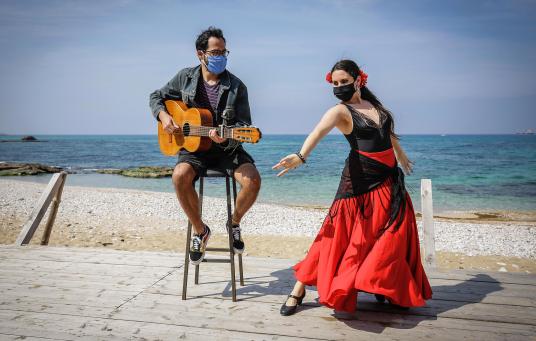
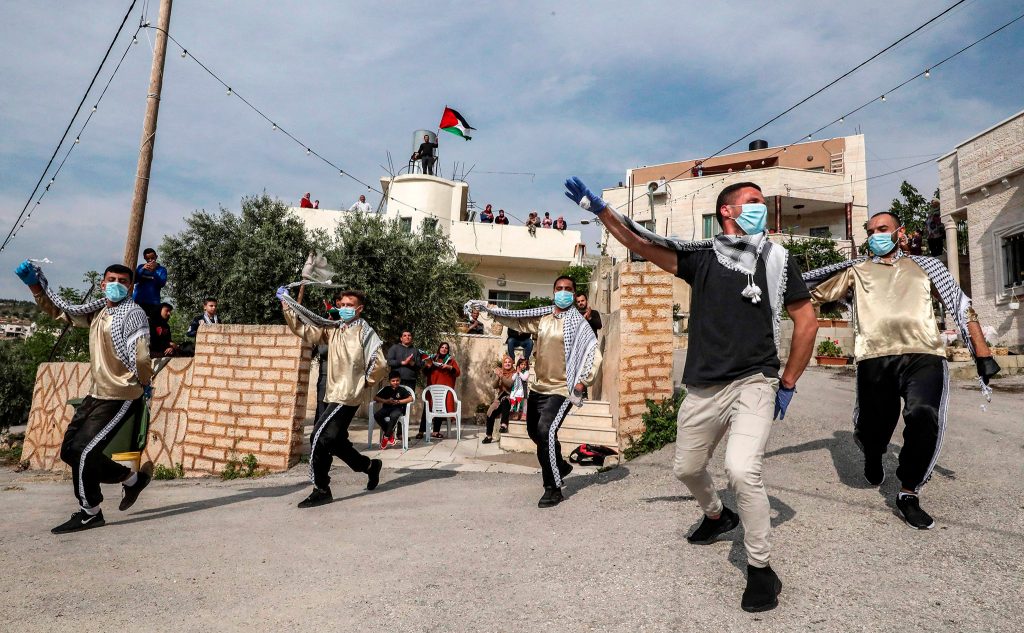
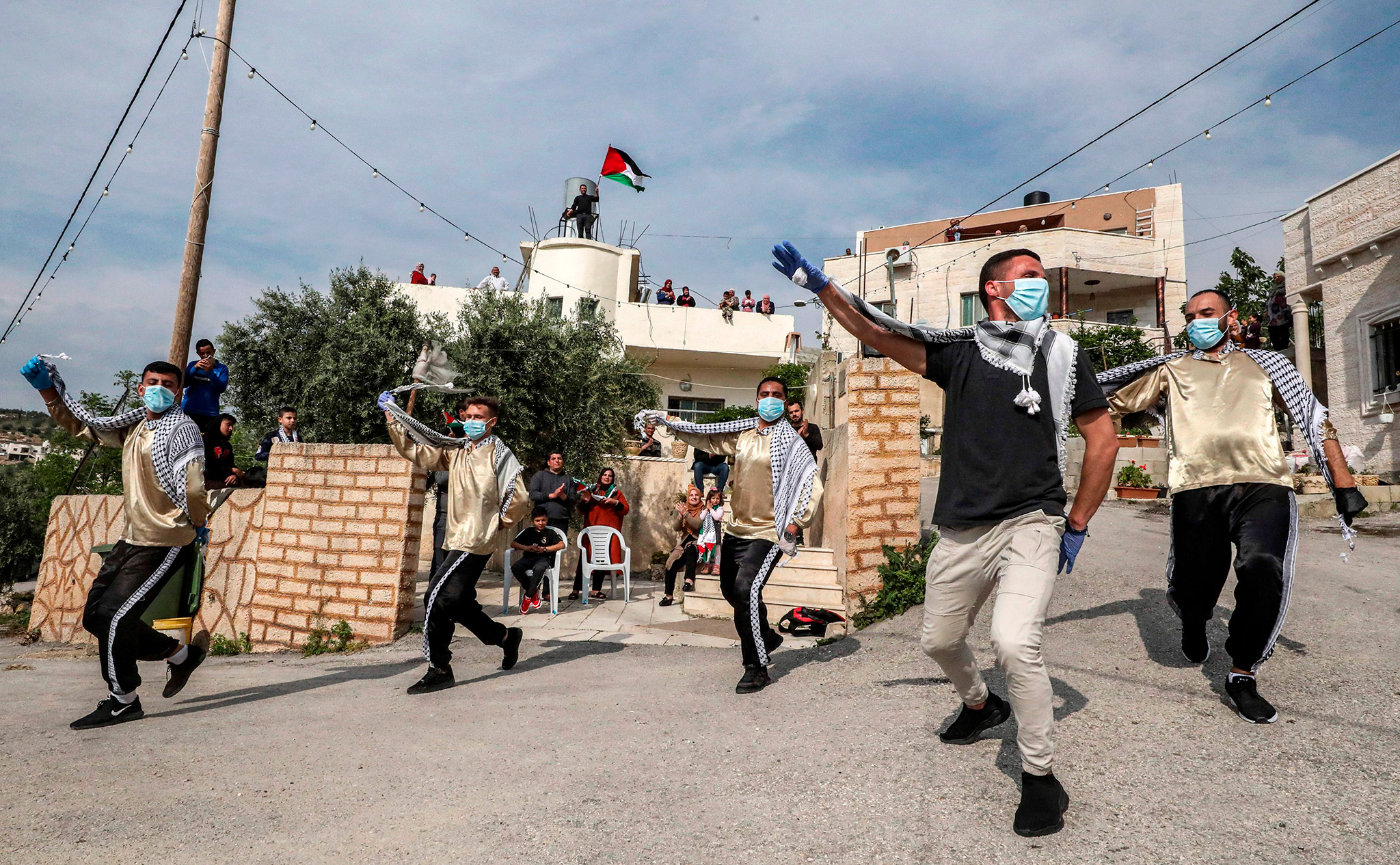
The Palestinian Jafra Dabke Team performs a traditional dabke dance while wearing latex gloves and surgical masks, in Tarqumya, a town in the occupied West Bank
Right:Argentinean dancer Maria Belen Ciaschi performs the flamenco, accompanied by Uruguayan musician and singer Walter Javier Maulelo, in Batroun, Lebanon. Both have been locked down in this coastal city due to the coronavirus pandemic.
“More than ever, we need to dance with purpose to remind the world that humanity still exists,” says Gregory Vuyani Maqoma, an acclaimed dancer and educator from South Africa who wrote this year’s International Dance Day message. “Our purpose is one that strives to change the world one step at a time.”
Choreography is a conversation. Thanks to the recent uptick in virtual events, geographically separated groups of strangers are moving in the same direction to the same rhythm without speaking a word. Recent research has proven that even our earliest ancestors recognized the health and social benefits of dance.
Wired for dance
According to a recent study published in the Public Library of Science’s Genetics Journal, creative dancers share two similar genes with good social communicators. These researchers believe the simultaneous evolution of those genes dates back more than 1.5 million years, when group organization and communication were essential for survival. Our prehistoric ancestors who were good dancers used those skills for bonding, social interaction, and courtship. We dance to celebrate harvests, beckon much-needed rain, and bring healing.
In the Guadeloupe Islands, dance was once one of the only means of communication for an entire population. West Africans were brought over to the French Caribbean as slave labor for the sugarcane fields starting in the 17th century. Members from various ethnic groups speaking different languages began to find common ground in rhythms and dances. This improvisational art form became Gwoka, meaning “big drum” in Creole. Each Gwoka rhythm conveys a specific human experience, such as love, sadness, the hard work in the fields, and the celebration of Carnival. The dancer and the drummer in the Gwoka tradition communicate together, speaking through movements and rhythmic accents.
I learned to speak a bit of this language at Akadémiduka, a Guadeloupean folk dance and music school in Pointe-à-Pitre. Gwoka shared similarities to the bomba dance that I had tried in Puerto Rico. Bomba, in turn, had reminded me of the tambu and tumba in Aruba and Curaçao—the swish of skirts accentuating movements in a similar way.
Here are a few ways to groove virtually
Debbie Allen leads dance classes for people of all ages and levels every week, live from her Instagram account. Follow at #DanceWithDebbieAllen.
Daybreaker puts on a pre-work dance party that’s perfect for social distancers. Ridiculous onesies, out-of-this-world outfits, and kids are encouraged.
New York City Ballet’s Tiler Peck, a principal dancer, hosts live daily ballet classes on Instagram. No barre necessary—just use a chair!
Kate Shela and Amber Ryan are movement teachers who offer joyful weekly guided dance sessions by Zoom. Previous dance experience isn’t necessary, since the focus is on the healing power of movement.
D-Nice started #ClubQuarantine from his kitchen with an eight-hour session posted on Instagram. More than 100,000 “party go-ers,” including Michelle Obama, Oprah, and Quincy Jones, tuned in, and now, the party continues weekly.
The Ailey Extension, the official dance studio of the Alvin Ailey American Dance Foundation, streams free daily classes via Instagram Live. Follow for schedules, then tune in to teachers’ accounts to join classes.
TodayTIX started the Intermission Mission in support of The Actors Fund and Broadway artists. Bop along to exclusive musical performances online while supporting the arts.
ClassPass offers live classes online via the company’s app. Stay in shape and help support the local studios and businesses hit hard from studio closures.
Mickela’s weekly #BareFeetLIVE series features interviews with musicians and dancers from around the world offering lessons on dances including the Irish sean nos, a Haitian folk dance, the Brazilian samba, and more. Tune in Tuesdays on Facebook Live and Thursdays on Instagram Live, both at 10 a.m. Pacific/1 p.m. Eastern.
No responses yet