
What are the different types of hip hop dance?
Introduction
Hip Hop culture originated in New York amongst young Hispanic and African American communities during the late 1960’s. Synonymous with rap, scratch music and graffiti art, the style encompasses the movements of break-dancing and body-popping, and has been internationally recognized since the 1970’s.
The 1980’s saw the emergence of a new style of hip hop into rap videos, distinguished from original break dancing styles by its concentration on footwork as opposed to acrobatics. Hereafter, the emergence of house music saw hip hop re-invent itself again with a broader range of influences and freer expression.
Old School / New School
Hip Hop History
The Old School Hip Hop Styles such as Locking, Popping and Break dancing or B-boying emerged from the USA in the 1970’s, and were a result of improvisational steps and moves from the streets and clubs. Old-school music had fast beats which matched the breaking moves.
Locking
Locking (originally Campbellocking) can be traced back to the late 1960’s and was created by Don Campbell. It is a style of funk and street dance and originally danced to traditional funk music such as James Brown.
The name is based on the concept of locking which means freezing from a fast movement and “locking” in a certain position, holding that position for a short while and then continuing in the same speed as before. It relies on fast and distinct arm and hand Hip Hop Manual movements combined with more relaxed hips and legs. The movements are generally large and exaggerated, and often very rhythmic and tightly synced with the music.
Locking includes quite a lot of acrobatics and physically demanding moves, such as landing on one’s knees and the split. These moves often require knee protection of some sort. Other important stylistic features are waving of arms, pointing, walking stationary and grabbing and rotating the cap or hat. Don Campbell created the original freezes, incorporating his unique rhythm and adding gestures such as points and handclaps.
In the early 1970s this set off a movement of Locking dance groups, notably Campbell’s group The Lockers. Another locker called Greggery ‘Campbell Jr.’ Pope and others set the foundation for locking dance and clothes style. Lockers commonly use a distinctive dress style, such as colorful clothing with stripes, suspenders, pegged knee length pants, hats and gloves.
Locking is quite performance oriented, often interacting with the audience by smiling or giving them a high five, and some moves are quite comical in nature.
Popping
The best way to describe the movement of popping would be to imagine a force of energy going through the body causing it to move like a wave. This style is difficult to manage at the technical level as it requiring command of isolations, a perfect knowledge of the body, and a good sense of the rhythm with major use of counter-tempo. The style demands continuous contraction of the muscles to the beat to give a jerky/snapping effect – a bouncy style.
Breakdance / B-Boying
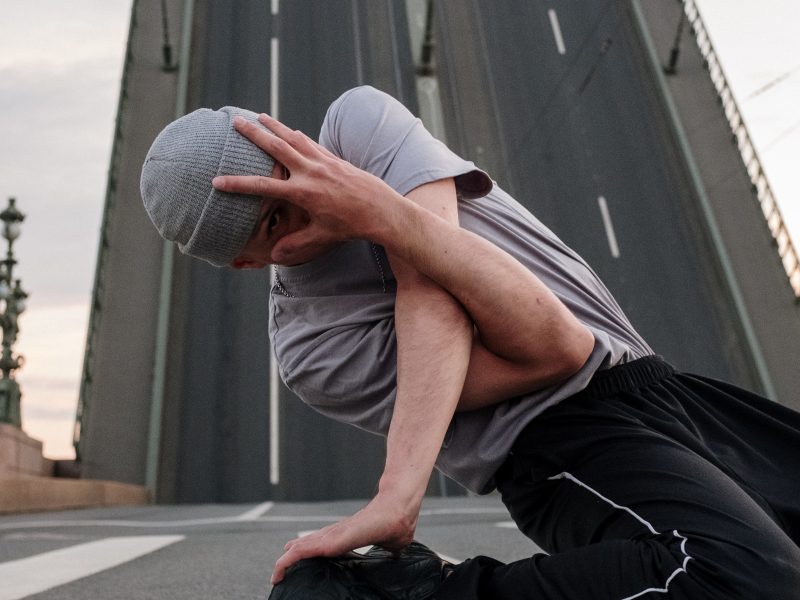
Breaking or b-boying, commonly called breakdancing, is a style of dance that evolved as part of hip-hop culture among Black and Latino American youths in the South Bronx during the 1970s. It is danced to both hip-hop and other genres of music that are often remixed to prolong the musical breaks.
Four basic elements form the foundation of breaking. The first is Toprock, a term referring to the upright dancing and shuffles. The second element is Downrock which refers to footwork dancing performed on the floor. The third element is the Freeze, the poses that breakers throw into their dance sets to add punctuation to certain beats and end their routines. The fourth element is the Power Moves. These are the most impressive acrobatic moves normally made up of circular motions where the dancer will spin on the floor or in the air.

Electric Boogie
Electric boogie is a style of popping (ticking) but the major difference is that Popping creates a soft wave whereas Electric Boogie creates more jerky waves with micro wave moves, executed with a high velocity more difficult than classical popping. The Robot, and the more smooth and controlled movements of mime are characteristic. Instead of throwing the body in and out of control like locking, or in total hydraulic control like The Robot, energy is passed through the body popping and snapping elbows, wrists, necks, hips and just about all the body joints along the way. Electric Boogaloo is more like mime in the sense that it imitates a live wire of electrical current or rippling river, but it still needs the control of The Robot to give it style.
No responses yet